Introduction
- Why home speakers still matter in the age of streaming
- The importance of understanding speaker types before purchasing
Understanding Home Speakers: The Basics
- What is a home speaker?
- How speakers actually produce sound
- Passive vs. active speakers: What’s the difference?
Types of Home Speakers
- Bookshelf Speakers
- Compact but powerful
- Ideal room size and placement tips
- Floor-standing Speakers (Tower Speakers)
- Designed for big sound
- Best suited for large rooms
- In-wall and In-ceiling Speakers
- Sleek and hidden
- Pros and cons of custom installation
- Soundbars
- Best for improving TV sound
- Compact and simple
- Satellite Speakers
- Small size, surprising sound
- Great for surround setups
- Subwoofers
- Why bass matters
- Active vs. passive subwoofers
Home Speaker Placement and Setup
- How speaker placement affects sound quality
- Stereo vs. surround: What’s the difference?
- Speaker positioning tips for every room shape
Wired vs. Wireless Speakers
- Benefits of each
- When wireless makes sense
- How to reduce lag and latency
Speaker Power and Sensitivity
- Why watts aren’t everything
- Matching speakers to your amplifier or receiver
- How sensitivity affects volume and clarity
Choosing the Right Speakers for Your Space
- Room size considerations
- Acoustics: Carpet, curtains, and walls
- Ideal speaker types by room function (living room, office, home theater)
Matching Speakers with Other Components
- Importance of AV receivers
- Do you need a preamp or DAC?
- Compatibility tips for seamless performance
Budgeting for Your Home Audio System
- What you can expect at each price tier
- Saving money without sacrificing quality
- Buying used vs. new
Top Brands to Consider
- Trusted names in home audio
- How brand affects sound signature
- Entry-level vs. audiophile grade options
Popular Speaker Setups Explained
- 2.0 vs. 2.1 vs. 5.1 vs. 7.1 setups
- When and why to upgrade
- True surround vs. virtual surround
Smart Home Integration
- How to connect your speakers to Alexa, Google, or Siri
- Multi-room audio systems like Sonos
- Pros and cons of smart speakers
Home Theater vs. Music Listening Setups
- Key differences in equipment and layout
- Prioritizing clarity vs. immersion
- Speaker systems that do both well
Common Mistakes to Avoid
- Buying based on looks only
- Not considering room acoustics
- Mismatching gear power levels
Where to Shop and What to Ask
- Online vs. in-store buying tips
- Questions to ask before checkout
- Return policies and warranties
Conclusion
- Final thoughts on finding the perfect speaker system
- Importance of auditioning before buying
- Encouragement to experiment and enjoy
FAQs
- Can I mix different brands of speakers in one setup?
- How do I know if I need a subwoofer?
- Are expensive speaker cables worth it?
- What’s the difference between Dolby Atmos and regular surround sound?
- Can wireless speakers sound as good as wired ones?
Introduction : The Ultimate Beginner Guide to Home Speakers: Everything You Need to Know Before You Buy
Let’s face it—there’s nothing like great sound to bring your movies, music, and games to life. In an age where streaming is king and content is more accessible than ever, your audio system deserves just as much attention as your screen. And that’s where home speakers come in. Whether you’re just dipping your toes into the world of home audio or looking to upgrade your setup, understanding the ins and outs of home speakers can feel overwhelming. But don’t worry—we’ve got your back.
In this guide, we’ll break down everything you need to know about choosing the perfect home speakers for your space, needs, and budget. From the different types of speakers to setup tips, from smart home integration to avoiding common buying mistakes—we’re covering it all. This isn’t just a buyer’s guide. It’s your crash course in home audio, simplified and humanized, just like you need it. Ready to unlock amazing sound in your home?
Understanding Home Speakers: The Basics
Before we jump into the cool stuff like smart integration and surround sound, let’s talk basics. At its core, a speaker is a device that converts electrical signals into sound. Inside each speaker are components like woofers, tweeters, and crossovers that work together to reproduce different frequencies—low bass, midrange tones, and crisp highs.
Now, there’s an important distinction you’ll run into right away: passive vs. active speakers.
- Passive Speakers need to be connected to an external amplifier or AV receiver. These are the traditional type and give you more flexibility in upgrading parts of your system.
- Active Speakers have built-in amplifiers, so they’re more plug-and-play. These are perfect for beginners or those who want a simpler setup.
Both types have their place, but choosing the right one depends on how hands-on you want to be with your system.
Another key point: not all speakers are created equal. Some are made for rich music listening, others are built for explosive home theater effects. That’s why it’s crucial to understand the different speaker types—and that’s exactly where we’re heading next.
Types of Home Speakers
Alright, now let’s dive into the fun stuff—the different types of home speakers. Whether you’re crafting a full-blown home theater or just want better sound for your music, there’s a speaker designed to fit your needs, space, and budget.
Don’t let the name fool you—bookshelf speakers are no joke. These compact powerhouses are designed to sit on a shelf, desk, or speaker stand, but they pack a punch way beyond their size. They’re ideal for small to medium-sized rooms and perfect for both stereo music listening and smaller home theater systems.
What makes bookshelf speakers so appealing is their balance between size and sound quality. Most models come with a woofer (for mids and lows) and a tweeter (for the highs), offering a full-range audio experience without taking over your room.
Where should you place them? Ideally, at ear level when seated, spaced evenly from your listening position, and with a bit of breathing room from the wall to avoid muddy bass. Also, pairing them with a subwoofer can give you the extra low-end power you might be missing.
They’re a top pick if you:
- Live in an apartment or smaller space
- Want great sound without floor-hogging towers
- Are just starting your audio journey
Floor-standing Speakers (Tower Speakers)
If bookshelf speakers are compact sedans, floor-standing speakers are SUVs—big, powerful, and ready to fill your room with immersive sound. These speakers are designed for those who take their audio seriously. With multiple drivers inside (woofers, midrange, tweeters), tower speakers cover a wide frequency range and can play loud without distortion.
They shine in:
- Large living rooms or home theaters
- Music setups that demand deep bass without a subwoofer
- Users looking for rich, full-bodied sound from a single pair
Because of their size, placement is key. Give them room to breathe, especially from walls and corners, and keep them slightly toed-in toward the listener for the best stereo imaging.
One downside? They take up space. But for many, the sonic benefits far outweigh the footprint.
In-wall and In-ceiling Speakers
Want sound without seeing the speakers? In-wall and in-ceiling speakers are your answer. These are built directly into your drywall and are perfect for clean aesthetics and immersive, room-filling audio—without visible clutter.
They’re especially popular in:
- Home theater surround systems
- Whole-home audio (multi-room setups)
- Rooms where floor or shelf space is limited
Pros:
- Virtually invisible
- Can be painted to match walls or ceilings
- Great for background music or immersive surround sound
Cons:
- More complex installation (often requires cutting drywall and running wires)
- Not easily movable or upgradable
- Sound quality depends heavily on placement and wall structure
Tip: Always plan speaker placement during home construction or renovation for a seamless install. Also, make sure to use moisture-resistant models in bathrooms or kitchens.
Let’s be honest—most built-in TV speakers sound… meh. That’s where soundbars come in. These sleek, all-in-one speaker systems sit right under your TV and deliver a serious upgrade to your audio with almost no setup hassle.
They’re ideal for:
- TV watchers and movie lovers
- Small living rooms or bedrooms
- People who want better sound without extra clutter
Many soundbars include built-in subwoofers or come bundled with wireless subwoofers and satellite speakers for a faux-surround experience. Some even support Dolby Atmos, offering 3D sound with upward-firing drivers.
The best part? Installation is simple—just plug it into your TV (usually via HDMI ARC), and you’re good to go. They’re also a popular pick for smart home setups, with built-in voice assistants and wireless streaming.
Satellite Speakers
Satellite speakers are the small but mighty members of the speaker family. These compact units are usually part of a surround sound system and handle specific channels like surround left/right or rear channels.
You’ll often find them in 5.1 or 7.1 home theater systems, where they:
- Complement larger front speakers
- Add immersive directional sound effects
- Fit discreetly on shelves, stands, or walls
Because they’re small, they usually don’t have full-range sound. That’s why they’re typically paired with a subwoofer that handles the low end. But don’t underestimate them—when placed correctly, they can add realism and depth to your audio setup that big speakers just can’t replicate on their own.
Now let’s talk about the soul of your sound system—the subwoofer. If you love feeling the rumble of explosions in movies or the deep bass in your favorite music, a subwoofer is non-negotiable. It’s designed to handle low frequencies (bass) and gives your system that extra dimension that standard speakers just can’t reach.
There are two main types:
- Active subwoofers: Come with a built-in amplifier (most common and beginner-friendly)
- Passive subwoofers: Require an external amp to function (rare in modern setups)
Where should you place it? While subs are generally less directional than other speakers, corner placement can amplify bass. But every room is different, so you might need to experiment with placement or even consider using two subs for smoother bass response.
Pro tip: Use a subwoofer with a crossover frequency control, so you can blend it perfectly with your main speakers for seamless audio.
Home Speaker Placement and Setup
You’ve picked your speakers—great! But even the most expensive speakers won’t sound good if they’re not placed properly. Speaker placement is one of the most underrated factors in home audio, and getting it right can completely change your listening experience.
Here’s what to consider:
- Height and angle: Your tweeters (the part that handles treble) should ideally be at ear level when you’re seated.
- Distance from walls: Avoid putting speakers flush against walls unless they’re designed for it. It can create boomy, unnatural bass.
- Stereo triangle: For stereo setups, form an equilateral triangle between the two speakers and your listening spot.
- Subwoofer placement: Corners boost bass, but might also cause boominess. Try placing it in different spots or use the “subwoofer crawl” method to find the sweet spot.
- Surround speaker setup: Rear and side speakers should be slightly above ear level and aimed toward the listening area.
Room shape and materials matter too. Hard surfaces like tile floors reflect sound, while carpets and curtains absorb it. The key is balance—too much of either can ruin your sound.
In today’s world of smart homes and minimalist setups, the battle between wired and wireless speakers is more relevant than ever. Each has its perks and pitfalls, and choosing the right one boils down to your preferences and setup goals.
Let’s break it down.
Wired Speakers
These are the traditional choice and still the go-to for audiophiles. Wired speakers rely on speaker cables to connect to an amplifier or receiver. While it might sound “old-school,” this method offers several benefits:
- Reliable sound quality: No dropouts or interference.
- High-resolution audio: Ideal for lossless formats like FLAC or WAV.
- Customizability: You can mix and match components for a tailored experience.
But they do come with some downsides:
- More cables = more clutter.
- Requires a receiver or amp.
- Less flexibility in placement.
Best for: Dedicated home theaters, stereo music lovers, and users who prioritize audio quality over convenience.
Wireless Speakers
These have exploded in popularity thanks to systems like Sonos, Bose, and HEOS. They connect via Wi-Fi or Bluetooth, which means no messy cables and often smart features like voice control and app-based management.
Pros:
- Easy setup and placement flexibility.
- Great for multi-room audio.
- Integrates with smart assistants (Alexa, Google Assistant).
Cons:
- Audio quality can suffer over Bluetooth (Wi-Fi is better).
- Can be prone to lag or sync issues, especially in surround setups.
- Usually not as customizable.
Best for: Casual listeners, small spaces, and users who want a clean, smart-home-friendly system.
Hybrid Tip: Some systems offer the best of both worlds—wireless connectivity with the option for hardwired setups (like KEF’s LS50 Wireless II). So, if you want convenience without sacrificing too much quality, these are worth a look.
Speaker Power and Sensitivity
Here’s where things get a bit technical—but stick with me. Understanding speaker power and sensitivity will help you make smarter decisions when matching speakers to your amplifier or receiver.
Power Handling (Watts)
This tells you how much power (in watts) a speaker can handle. You’ll often see two ratings:
- RMS (continuous power): The amount the speaker can handle over time.
- Peak power: The maximum it can handle in short bursts.
More watts don’t always mean “better”—it just means the speaker can handle more power. What’s important is matching the speaker’s power handling to your amplifier’s output. Too little power and you risk distortion. Too much, and you might blow your speakers.
Sensitivity (dB)
This tells you how loud the speaker plays with 1 watt of power from 1 meter away. A higher sensitivity rating (say 90dB+) means the speaker can get louder with less power.
- 85 dB = low sensitivity (needs more power)
- 88–90 dB = average
- 91+ dB = high sensitivity
Why it matters: If you have a low-powered amp, pair it with high-sensitivity speakers. If you have a powerful amp, you have more flexibility.
Choosing the Right Speakers for Your Space
Let’s be honest—sound is just as much about your room as it is about your gear. You could have a $5,000 speaker system, but if your space isn’t ideal, it won’t sound its best. That’s why it’s crucial to consider room size, shape, and acoustic elements when choosing speakers.
Room Size
- Small Rooms (under 150 sq. ft.)
Opt for bookshelf speakers, compact subwoofers, or a quality soundbar. Avoid overpowered floor-standers unless you want to risk overwhelming your space. - Medium Rooms (150–300 sq. ft.)
This is the sweet spot. You can go with a 5.1 surround system, pair bookshelf speakers with a subwoofer, or go for smaller towers. - Large Rooms (300+ sq. ft.)
This is where full tower speakers, dual subwoofers, and 7.1 or Atmos setups shine.
Acoustics Matter
Here’s what changes your sound more than you think:
- Hardwood floors and bare walls = Echo and brightness.
- Carpets, curtains, and furniture = Absorb sound and reduce echo.
Fixes:
- Add rugs or sound panels.
- Use thick curtains if your space is overly “live” or echoey.
- Bookshelves and fabric sofas naturally absorb sound.
Matching Speakers with Other Components
A speaker doesn’t live in isolation—it’s just one part of a whole system. So how do you make sure your speakers, amplifier, receiver, and source all play nice together?
Your receiver is the brain of your home audio setup. It powers your speakers, processes your sound formats (like Dolby Atmos), and connects everything from your TV to your Blu-ray player.
Make sure it:
- Matches your speaker’s impedance and power needs.
- Supports the number of channels you want (5.1, 7.1, etc.).
- Has the right connections (HDMI ARC, Bluetooth, Wi-Fi, etc.)
If you’re a music purist, you may want a DAC (digital-to-analog converter) for cleaner sound from digital sources. Or a preamp if you’re using passive speakers and a power amp separately.
Compatibility Tips
- Don’t mismatch a weak receiver with high-demand speakers.
- Use speaker wire with the proper gauge (thicker for longer runs).
- Check speaker impedance (usually 4, 6, or 8 ohms) to match with your amp.
Budgeting for Your Home Audio System
You don’t need to go broke to get good sound. But you should be smart about your home audio budget, especially if you’re building a system from scratch.
Budget Breakdown (Rough Guide)
| Budget Tier | What You Can Get |
|---|---|
| Under $300 | A decent soundbar or powered bookshelf pair |
| $300–$800 | Quality 2.1 system or entry-level 5.1 setup |
| $800–$1,500 | Mid-tier tower speakers, AVR, and sub |
| $1,500+ | Premium home theater or audiophile-grade stereo |
Money-Saving Tips
- Buy used or refurbished from trusted sellers.
- Look for bundled deals (especially during sales).
- Start small: get a 2.0 system now and expand later.
Top Brands to Consider
When it comes to home speakers, the brand matters—not just for quality, but also for sound signature, reliability, and support. Some brands are known for their crisp highs, others for deep, rumbling bass. Let’s look at a few of the most trusted names in the game and what they bring to the table.
1. Klipsch
Klipsch is a favorite among home theater enthusiasts. Their speakers are known for:
- High sensitivity (great with low-powered amps)
- Crisp, detailed highs thanks to their horn-loaded tweeters
- Classic wooden cabinet designs
Great for: Home theaters and loud, dynamic music setups.
2. Polk Audio
Polk offers a solid balance of performance and affordability. They’re a great entry point for:
- Balanced sound signature
- Versatile speaker lines for all setups
- Affordable 5.1 surround packages
Great for: Beginners and budget-conscious buyers who still want quality.
3. Bowers & Wilkins (B&W)
A high-end brand known for premium materials and elite performance. Think:
- Lush, refined sound
- Stylish, modern speaker designs
- Audiophile-approved components
Great for: Music lovers who want a premium experience with design to match.
4. Sonos
If you’re all about wireless, multi-room, and smart home integration, Sonos is king. Highlights include:
- Easy setup and scalability
- Seamless app control and streaming
- Voice assistant integration
Great for: Smart homes, whole-house audio, and wireless convenience.
5. KEF
KEF is all about innovation and high-performance speakers with unique designs.
- Known for their Uni-Q drivers (tweeter inside the woofer for better imaging)
- High-resolution clarity
- Excellent powered options (like LS50 Wireless II)
Great for: Stylish, space-conscious audiophiles and tech-savvy users.
Other honorable mentions:
- Elac – amazing bang-for-buck
- JBL – punchy and powerful, especially for movies
- Definitive Technology – known for built-in subwoofers
- Yamaha – reliable, clean sound systems with AV components
When choosing a brand, don’t just look at specs—audition them if possible. Everyone hears sound differently, and your ears are the final judge.
Popular Speaker Setups Explained
You’ve probably seen numbers like 2.0, 2.1, 5.1, or 7.1 when shopping for speakers. But what do these mean? They’re not just tech jargon—they’re shorthand for how many speakers (and subwoofers) you’re getting.
2.0 System
- Two main speakers (left and right)
- No subwoofer
Perfect for music lovers who want clean stereo sound without extra components.
2.1 System
- Two speakers + one subwoofer
Adds bass depth for a fuller sound. Great for music and casual movie watching.
5.1 Surround Sound
- Three front speakers (left, center, right)
- Two surround speakers (left and right)
- One subwoofer
This is the standard for home theaters and gives you directional audio—great for movies and games.
7.1 Surround Sound
- Same as 5.1 + two rear speakers
Gives even more depth, especially in larger rooms. You’ll hear more precise sound movement, like footsteps behind you.
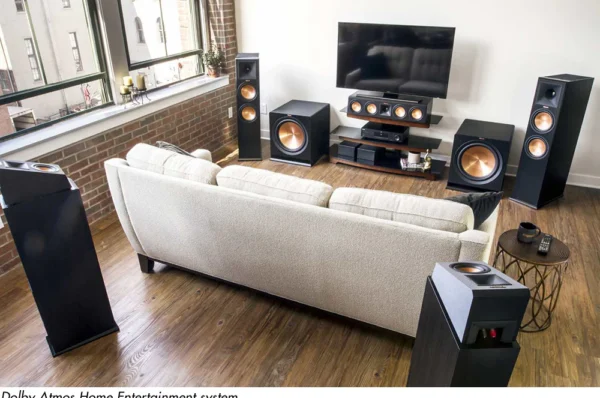
Dolby Atmos / 5.1.2 or 7.1.4
- Adds height speakers for overhead effects
The most immersive setup for 3D audio, like planes flying above or rain falling from the ceiling.
Tip: Don’t feel like you need to start with a full setup. You can build it gradually—start with a 2.1 system and add more speakers as your budget and space allow.
Smart Home Integration
Welcome to the future—where your speaker not only plays music but also follows voice commands, connects to your phone, and works in sync with your lights, thermostat, and even your fridge.
Here’s what smart speaker integration looks like:
Voice Assistants
Many speakers now include or support:
- Amazon Alexa
- Google Assistant
- Apple Siri (via AirPlay)
With voice control, you can:
- Adjust volume
- Play music from Spotify, Apple Music, etc.
- Control smart home devices
Multi-Room Audio
With systems like Sonos, Bose SoundTouch, or Denon HEOS, you can:
- Play different music in each room
- Sync one playlist throughout the house
- Control everything from your phone
Streaming Services Integration
Modern wireless speakers support:
- Spotify Connect
- Apple AirPlay 2
- Chromecast Audio
- TIDAL, Deezer, Pandora, and more
Want to blast your favorite playlist from your kitchen to your patio with one tap? You got it.
Pros of Smart Integration
- No need for multiple remotes
- Hands-free operation
- Easily expandable over time
Cons
- Privacy concerns (voice assistants)
- Dependency on stable internet
- Sometimes lower fidelity than wired systems
If you love convenience and modern tech, smart speakers are a no-brainer.
Home Theater vs. Music Listening Setups
Not all speakers are created for the same purpose. While some shine in a home theater, others are fine-tuned for music reproduction. So, should you build a system for movies or music—or try to strike a balance?
Home Theater Focus
You’ll want:
- Center channel for dialogue clarity
- Subwoofer(s) for cinematic rumble
- Surround speakers for immersion
- Possibly Atmos speakers for 3D effects
Priorities: Volume, impact, immersion
Music Listening Focus
Key components:
- High-fidelity stereo speakers (bookshelf or towers)
- Quality DAC or amp for signal clarity
- Flat frequency response for accuracy
Priorities: Clarity, balance, tone accuracy
Best of Both Worlds?
Yes, it’s possible—but you may need to invest a bit more. Some systems handle both well, especially brands like KEF, B&W, or high-end Yamaha setups. Just remember to tune your system depending on the use case.
Common Mistakes to Avoid
Let’s save you some regret. These are rookie mistakes people make when buying home speakers—and how to avoid them.
- Buying Based on Looks
Yes, pretty speakers exist. But don’t buy them just because they match your couch. Always prioritize sound quality. - Ignoring Room Acoustics
Your room is half your system. An expensive setup in a bad room still sounds bad. Treat your space if needed. - Mismatching Gear
Don’t pair low-impedance speakers with a weak amp. Check your gear’s power ratings and compatibility. - Overdoing the Bass
Bass is awesome—but too much can muddy your sound. Balance is key. - Skipping the Audition
Try before you buy, if possible. Everyone hears differently. What sounds “bright” to one might be “harsh” to another. - Forgetting Future Expansion
Always think ahead. Can you upgrade this system later? Will it work with future tech?
Where to Shop and What to Ask
You’ve done the research—now where should you buy?
In-store Pros:
- Auditioning speakers
- Expert advice
- Easier returns/support
Online Pros:
- Better prices
- Larger selection
- Reviews and comparisons
Questions to Ask Before Buying:
- Does this work with my amp or receiver?
- What’s the return policy?
- Can I expand the system later?
- Is there a warranty?
Pro tip: Check Dropsasa for good support and return policies. Also, look for bundles or discounts on open-box items.
Conclusion
Home audio might feel intimidating at first, but once you understand the basics—speaker types, placement, power, and setup goals—it all starts to click. Whether you’re chasing earth-shaking bass for movie night or crystal-clear mids for your vinyl collection, there’s a speaker system that fits your needs and space.
Take your time, trust your ears, and don’t fall for the hype. Great sound is about balance, not budget. Start small if you need to, and remember—you can always expand and refine your system as you go.
Now go out there, press play, and fall in love with sound all over again.
FAQs
1. Can I mix different brands of speakers in one setup?
Yes, but be careful. The center and front left/right speakers should ideally match to maintain tonal balance. Mixing subwoofers and surrounds is more flexible.
2. How do I know if I need a subwoofer?
If your main speakers don’t reach below 60 Hz in frequency response—or you love bass-heavy music and movies—yes, you’ll want one.
3. Are expensive speaker cables worth it?
Not really. As long as you use the proper gauge and quality connectors, fancy cables won’t make a noticeable difference in most systems.
4. What’s the difference between Dolby Atmos and regular surround sound?
Atmos adds height channels for 3D sound—like hearing helicopters fly overhead. Regular 5.1 or 7.1 stays on one horizontal plane.
5. Can wireless speakers sound as good as wired ones?
Yes—but usually in high-end wireless models using Wi-Fi (not Bluetooth). Lower-end Bluetooth speakers can’t compete with wired setups in fidelity.